




Basic information
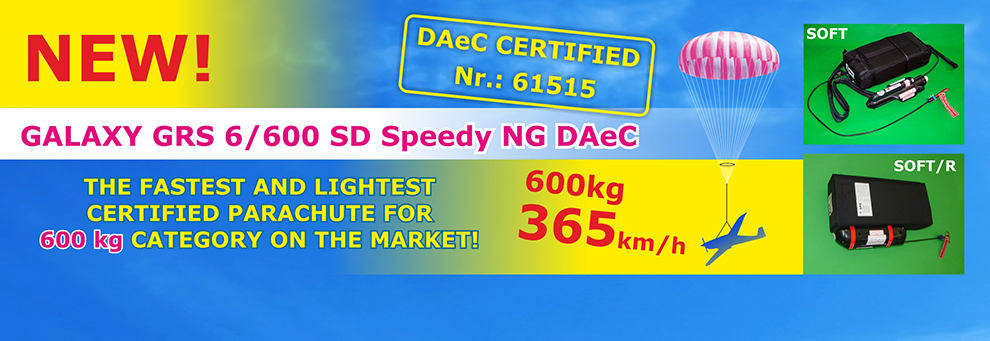
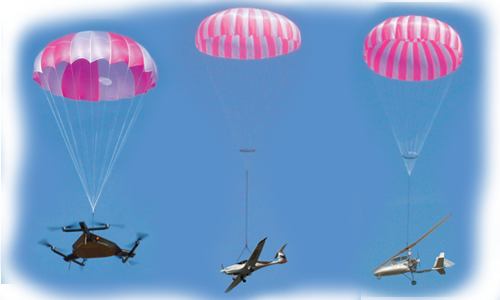
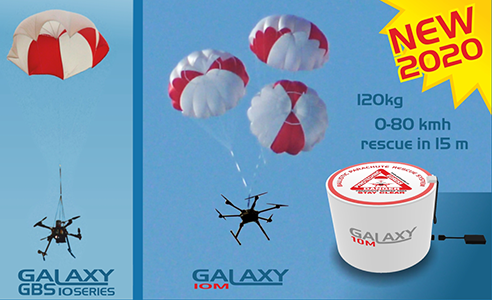
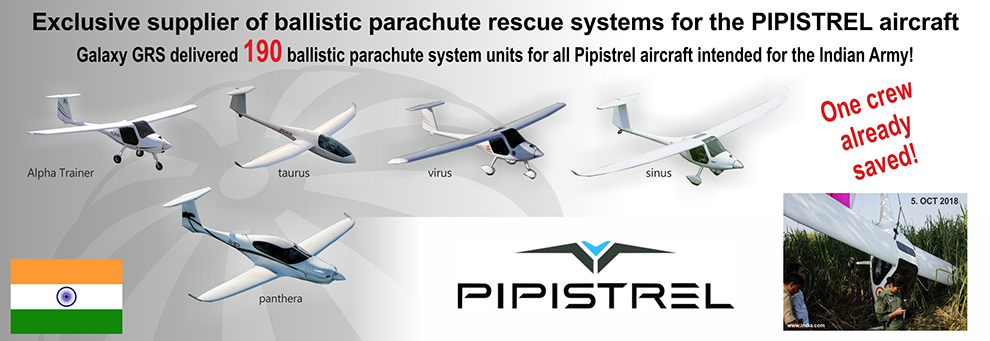
Company Galaxy GRS is the biggest European producer of parachute ballistic rescue systems aimed for ultralights, light sport aircraft, unmanned Aircraft and experimentals, ranging up to speed of 350 Km/h. The company exports 90% of production to all continents and covers 80% of the market in France and Italy in various modifications and ways of use. Thanks to its long tradition since 1984, the systems GRS are constantly updated and enhanced. Our company does not pursue development of parachutes only for high speeds, but during the long testing, the company pays special attention to quick opening in low speeds enabling a safe rescue from lowest possible heights. According to the world statistics, most accidents happen in low heights and speeds.
Externally the Galaxy rocket parachute system looks very similar to other available products, but on closer inspection there are obvious differences which make the GRS a better unit. While it is unlikely that you will ever use the GRS in an aircraft, it is comforting to have a parachute system for an unexpected dramatic event.
The GRS systems use parachutes, that besides an ability of quick opening at high speeds, as by other producers, are able to open quickly even at low speeds.
This extraordinary ability is enabled by a well-thoughtout design of particular types according to aircraft weight and speed. The Galaxy GRS exerted much effort and money for development and testing of its parachutes, all covered by the patent 6/2012 Patent No.: US,997,535 B2 - 08.16.2011.
This important attribute of quick opening at low speeds ranks these systems among the most useful ballistic parachutes in the world.
According to the world statistics 80% of all accidents is in airfield vicinity, low heights and low speeds.
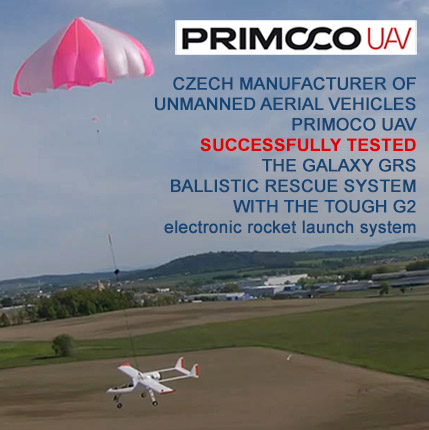
Unlike other producers of these rescue devices, the Galaxy GRS is the sole company that presents video footage of these tests on its web site. It convincingly demonstrates outstanding attributes of these parachutes confronted with others. (for instance, very small opening shock by the parachutes of new series 6 for the category S-LSA, experimental, general aviation and UAV).
The GRS is a new design in which the canopy is not gradually drawn from a box by means of a long conventional sleeve, distorted by air currents and possibly fouling on the aircraft structure or its debris, during deployment. The GRS canopy is drawn away from the aircraft in a short special compact container to a length of 15-18 meters from the aircraft depending on the size of GRS. At this point the whole hanging system from canopy to aircraft is stretched, a container lock is released and the canopy can be inflated directly, significantly reducing the risk of debris damaging the canopy. The whole design of the GRS is purposefully constructed for the fastest possible opening which enhances the potential of a rescue of the aircraft and crew from the lowest possible height. Pattented Úřad pantentového vlastnictví number 285 318.

GRS 5/450; GRS 5/472,5 - DULV - Nr R21/01-1, R21/01-11
Speed: 45 km/h Total time: 3,85sec. - Download video
This important attribute of quick opening at low speeds ranks these systems among the most useful ballistic parachutes in the world.
According to the world statistics 80% of all accidents is in airfield vicinity,low heights and low speeds.
Unlike other producers of these rescue devices, the Galaxy GRS s.r.o. is the sole company that presents video footage of these tests on its web site. It convincingly demonstrates outstanding attributes of these parachutes confronted with others.( for instance, very small opening shock by the parachutes of new series 6 for the cathegory S-LSA).
The GRS is a new design in which the canopy is not gradually drawn from a box by means of a long conventional sleeve, distorted by air currents and possibly fouling on the aircraft structure or its debris, during deployment. The GRS canopy is drawn away from the aircraft in a short special compact container to a length of 15-18 metres from the aircraft depending on the size of GRS. At this point the whole hanging system from canopy to aircraft is stretched, a container lock is released and the canopy can be inflated directly, significantly reducing the risk of debris damaging the canopy. The whole design of the GRS is purposefully constructed for the fastest possible opening which enhances the potential of a rescue of the aircraft and crew from the lowest possible height.Pattented Uřad pantentového vlastnictví number 285 318.
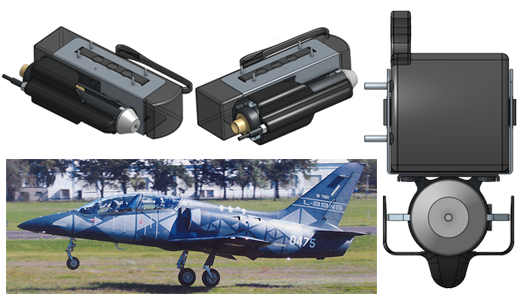
Firing the system is done mechanically by hand pulling the activation handle with a force of approximately 9 kg. Launching ignition mechanism is activated and two igniters will be fired by double strikers which will ignite the powder load and ignite the TPH (solid fuel) of the rocket engine.
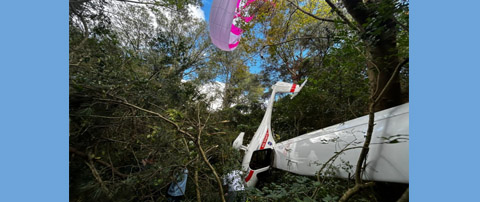
During firing there is minimum rearward impact. Unlike other similar systems, the flame from the rocket tube is not directed back in the trajectory of the rocket, which causes a powerful back fire into an aircraft construction. Existing exhausts can be diverted outside aircraft. After canopy opening above the aircraft at a height of around 18 meters the rocket engine continues its own flight with its remaining energy and seperates from the main canopy. It then free falls with its own braking INNER chute. Depending on the canopy size, the main canopy system is open and fully inflated above the aircraft between 1.5 - 6.0 seconds after being fired with regard to the flight speed. This means that a rescue can be successful from as little as 30 m to 150m over the ground, depending on the installation, position of the aircraft, its speed and trajectory. The necessary height needed for a rescue is deduced from measured figures in horizontal flight up to the stated VNE of aircraft in its MTOW.These figures are stated in the technical parameters of the system.It is possible to aim the rocket in any direction but, the best direction is vertical to the lengthwise axis of the plane in an upward or slightly oblique aft direction. The GRS system is available for use in categories Ultralights, Experimental, Light Sport Aircraft ,gliders and other, ranging from 250kg up to 2000kg of the aircraft total take off weight (MTOW). The rocket system has been designed with sufficient power reserve so that it can pull out the chute even under extreme conditions ranging in temperatures from -40°C up to +60°C.